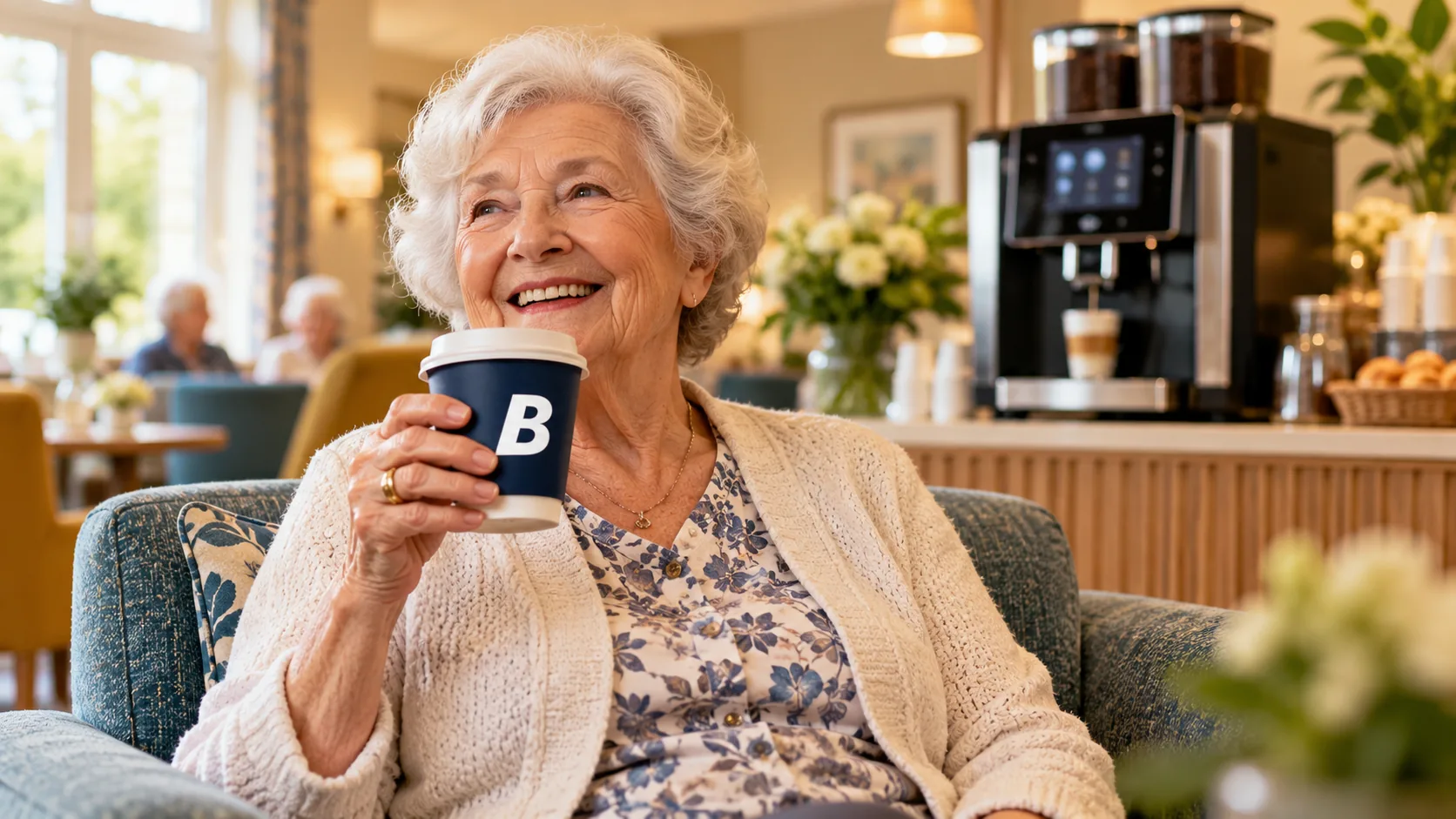
In most care homes, coffee still means a jar of instant and a kettle in the kitchen, or a flask on the drinks trolley. It works, but it rarely feels like a treat, and for many residents a good cup of coffee was a small daily pleasure long before they moved in.
A well-chosen coffee machine for care homes can change that. Residents get a proper choice of drink, families get a café-style welcome when they visit, and staff on long and night shifts get something better than another instant. But a care home isn't an office. Safety, hygiene and staff time matter far more, and the right machine is the one that fits around your care, not the other way round.
This guide covers what to think about before you choose one.
Why Care Homes Are Moving Beyond Instant
Instant coffee is cheap and simple, and that's why it has lasted. But it gives residents very little choice: one coffee, made one way. A bean-to-cup machine grinds fresh beans for every cup and can make a flat white, a latte, a cappuccino, an americano or a hot chocolate at the press of a button. It offers the kind of choice residents would have had in a café.
It also changes how the home feels to visitors. Families notice small things. Being offered a proper coffee when they arrive, and being able to make one for their relative in the lounge, makes a visit feel less like an appointment and more like time together.
If cost is the first question, our bean-to-cup vs instant cost comparison sets out the real per-cup difference.
Who the Machine Is Really For
In a care home, one machine often serves three quite different groups, and it's worth deciding up front who it's mainly for.
- Residents. Some will be able to use a simple touchscreen themselves. Others will have drinks made for them. For residents, the benefit is choice and the familiarity of a "proper" coffee.
- Visitors and families. A self-serve machine in a visitors' lounge or café corner lets families help themselves without asking busy staff. This is often where the biggest difference in how the home feels comes from.
- Staff. Care work involves long shifts, night shifts and short breaks. A good coffee in the staff room is a small but daily way of showing staff they're valued, and it saves the coffee-shop run that a 20-minute break doesn't allow.
Many homes end up with a machine in a communal or visitors' area, with staff making drinks for residents who need support. Larger homes and groups sometimes add a second machine for the staff room.
Choice and Independence: How It Supports Regulation 14
Care homes in England are inspected against CQC's fundamental standards, and Regulation 14 (meeting nutritional and hydration needs) is the one that covers food and drink. A coffee machine doesn't make a home compliant on its own, but several points in CQC's guidance line up closely with what a good machine provides:
- Drinks around the clock. The guidance says "other drinks should be made available periodically throughout the day and night". A machine that's ready at 3am for night staff and wakeful residents makes that easier than boiling a kettle on a quiet unit.
- Choice. CQC says "people should be able to make choices about their diet", and that every effort should be made to meet people's preferences. A menu of coffees, decaf and hot chocolate is a real choice in a way that "tea or coffee?" isn't.
- Independence. The guidance says "people should be encouraged to eat and drink independently." For residents who are able to, choosing and making their own drink is a small piece of everyday independence.
Wales, Scotland and Northern Ireland have their own regulators and standards, but the principles of choice, preference and access to drinks are similar.
Hot Drinks and Safety
Hot drinks are a known scald risk for frail residents, and any coffee machine for care homes has to be introduced with that in mind. Decisions about who can safely use the machine unaided, and what kind of cup they should use, belong in your own risk assessments and care plans, not in a supplier's sales pitch.
What a machine can do is give you more control than a kettle:
- Controllable drink temperature. On commercial machines, the serving temperature can be set rather than left to whoever filled the kettle. It's worth discussing the right setting for your home at the demo.
- Placement. Put the machine in a supervised communal area or a visitors' lounge rather than somewhere residents may use it unobserved, if that's what your assessments call for.
- Cups. Choose cups and lids to suit your residents. Some homes use lidded or two-handled cups for some residents. The machine should take the cups you actually use.
- Simple controls. A clear picture menu with one button per drink reduces the fiddling and spills that come with a kettle and a jar.
Tea, Decaf and the Rest of the Menu
Let's be honest: care homes run on tea, and a coffee machine won't replace the tea round. A bean-to-cup machine dispenses hot water for tea, but for a full tea trolley your urn or kettles will stay. Think of the machine as a way to add choice, not as a replacement for everything.
What to look for on the menu:
- A proper decaf. Many residents prefer decaffeinated coffee, especially later in the day. We supply a Colombian decaf, decaffeinated with a natural sugarcane process, that doesn't taste like a compromise.
- Hot chocolate and other options. Our mid-range machines add hot chocolate, chai and matcha to the coffee menu, which widens the choice for residents who don't drink coffee.
- Milky, gentle drinks. Lattes and flat whites tend to be popular with people moving on from instant, because they're milder than an espresso-based black coffee.
Fresh or Powdered Milk in a Care Setting
Bean-to-cup machines come in fresh milk and powdered milk versions, and in a care home the choice is worth more thought than usual.
- Fresh milk gives the best taste and texture, but the milk system has to be cleaned every day, and the milk needs to be kept chilled next to the machine.
- Powdered milk needs no fridge, keeps far longer and removes the daily milk-system clean. In a home where care staff, not baristas, will be looking after the machine, that's a real advantage for hygiene and staff time.
Our guide to fresh milk vs powdered milk coffee machines goes into the trade-off in more detail.
Allergens: milk is one of the 14 allergens that food businesses must give information on. Keep the ingredient and allergen details for any milk powder, hot chocolate or syrup alongside the rest of your allergen information, and ask your supplier for it up front.
Hygiene and Staff Time
Infection control is already part of daily life in a care home, so the machine shouldn't add a complicated new routine. A well-run bean-to-cup machine needs a few minutes at the end of the day: emptying the grounds bin and drip tray, running the rinse programme and wiping it down. Our bean-to-cup cleaning guide sets out the full routine.
The important part is that the deeper work, such as internal deep cleans, servicing and parts, is handled by your supplier on a schedule. Care staff shouldn't be the ones taking a machine apart.
Where to Put It and What It Needs
Before choosing a machine, check the space you have in mind:
- Power: a standard socket nearby. Larger machines may need their own circuit.
- Water: some machines run from a refillable tank. Others are plumbed in, which suits busy homes because nobody has to refill a tank.
- Space: room for the machine, cups and, for fresh milk, a small fridge.
- Traffic: for visitors, near the entrance or the main lounge. For staff, in the staff room, away from resident areas.
We check all of this on site at the free demo, so there are no surprises on installation day.
Paying for It
Care home budgets are tight, so the payment route matters. There are two ways to own a machine with us:
- Lease to own: from £89 a month through Shire Leasing, typically over 36 months, with no upfront cost and the machine yours at the end of the term.
- Outright purchase: prices on request, with buy now pay later available to spread the cost.
For care groups, the same machine and drinks menu across every home makes ordering, training and budgeting simpler. We can quote for several sites at once.
How Blend 2 Vend Approaches This
We supply, install and fully manage bean-to-cup machines across the UK, including our home patch of Bournemouth, Poole and Dorset. For a care home that means:
- A free demo and taste test on site, so residents, staff and families can try the drinks first
- A choice of fresh milk or powdered milk machine, with the drink temperature set to suit your home
- On-site staff training at installation, covering daily use, cleaning and maintenance
- Scheduled servicing and deep cleans, plus automatic restocking of beans and consumables
- A 24-hour support line that resolves around 99% of issues over the phone, with a next-day callout as standard if an engineer is needed
Frequently Asked Questions
What is the best coffee machine for a care home? For most care homes, a bean-to-cup machine with simple picture-button controls, a decaf option and a powdered milk system strikes the best balance of choice, hygiene and low staff workload. Busy homes with a staffed café area may prefer fresh milk for taste.
Can care home residents use a coffee machine themselves? Some can, and for them it's a welcome bit of independence. Whether a particular resident should use it unaided is a decision for your risk assessments and care plans. Many homes place the machine in a supervised communal area, and staff make drinks for residents who need support.
Is a coffee machine safe in a care home? It can be introduced safely with the right placement, cups and temperature setting, and with your own risk assessments deciding who uses it unaided. A commercial machine also gives you more control over drink temperature than a kettle does.
Can a bean-to-cup machine make tea? It dispenses hot water for tea, and some machines handle larger cups or mugs. For a full tea round, most homes keep their urn or kettles and use the machine to add coffee, decaf and hot chocolate choices.
How much does a coffee machine for a care home cost? With Blend 2 Vend, lease to own starts from £89 a month with no upfront cost, and outright purchase prices are available on request. The right machine depends on how many drinks your home serves in a day.
Bring Better Coffee to Your Care Home
Book a free demo and taste test. We'll bring the machine to your home, let residents, staff and visitors try the drinks, and check the space you have in mind.
Book a free demo → or speak to a specialist.