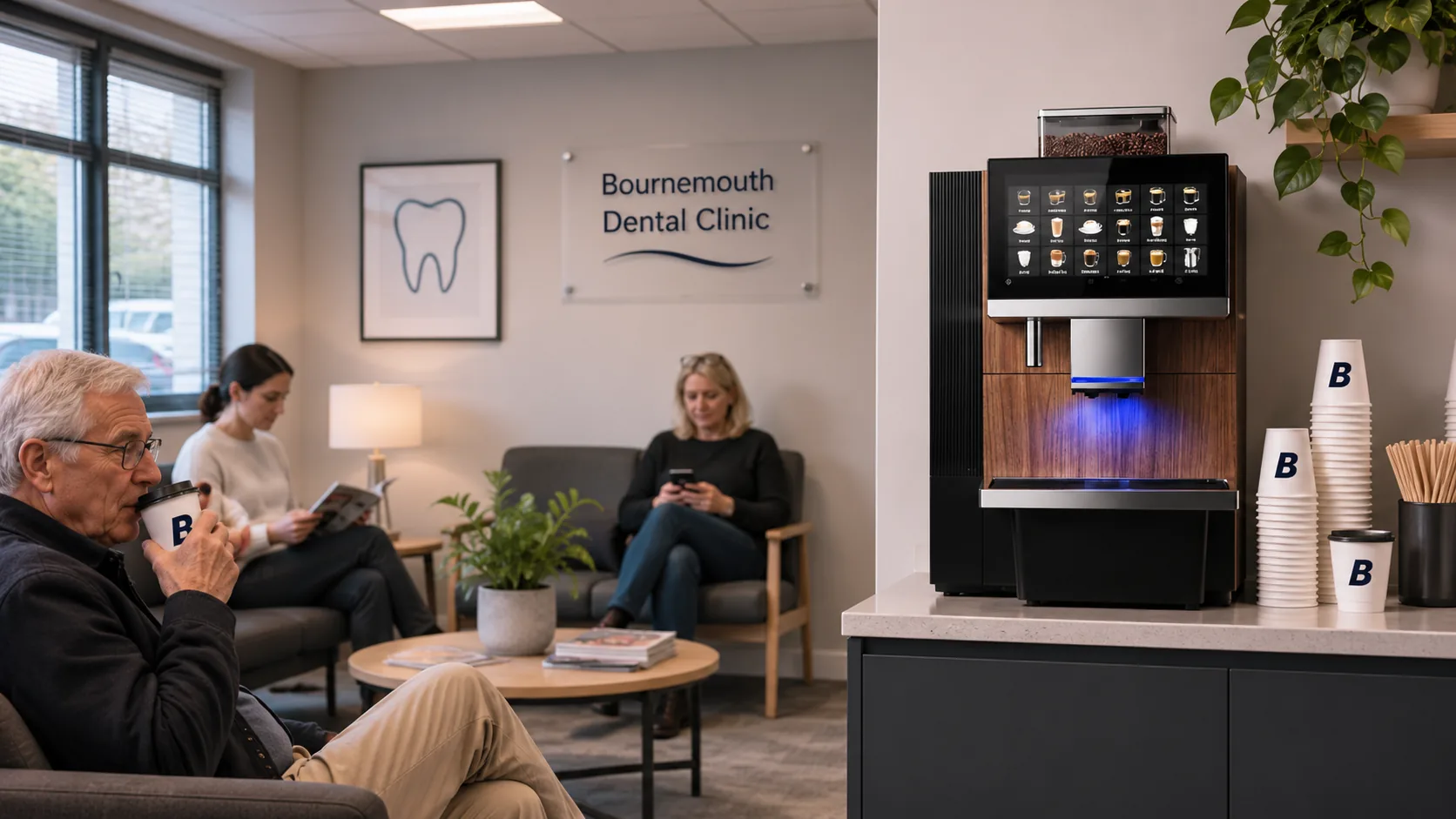
Nobody enjoys waiting for an appointment. Whether it's a check-up at the dentist, a physio session, an eye test or a nervous half-hour with a poorly pet, the waiting room shapes how people feel before they've even been seen. A good coffee in their hand is one of the simplest ways to make that wait feel calmer and more cared for.
But a waiting room in a clinical practice isn't a café. Some patients shouldn't be drinking at all, children and pets are about, and hygiene matters more than almost anywhere. This guide covers how to choose a coffee machine for waiting room use that improves the experience without creating extra work or risk for your team.
Why Practices Add a Coffee Machine
- It makes the wait feel shorter. Being able to make a drink gives people something to do and signals that you've thought about their comfort.
- It sets the tone for private care. Patients paying privately notice the details, and a proper coffee feels more like a premium service than a water cooler.
- It takes pressure off reception. A self-serve machine means staff aren't asked to make drinks between phone calls and check-ins.
- It helps the people who come with patients. Parents, partners and carers often wait the longest, and they'll appreciate it most.
- It works for your team too. Many practices find the same machine, or a second one, is a real perk in the staff room between back-to-back appointments.
Which Practices It Suits
- Dental practices, especially private and mixed practices where patients may wait with family
- Private GP and specialist clinics, and outpatient areas at private hospitals
- Physiotherapy, chiropractic and sports injury clinics
- Aesthetics and cosmetic clinics, where the setting is part of the service
- Veterinary practices, where owners can wait a long time during surgery or tests
- Opticians, where an eye test and frame choice can take a while
The Clinical Common Sense
This is the part generic healthcare sales pages skip, and it's the part that matters most to you.
Patients who shouldn't eat or drink. Patients booked for sedation or a general anaesthetic are usually told not to eat or drink beforehand. Your reception team knows who they are. A small, discreet sign near the machine ("If you've been asked not to eat or drink before your appointment, please check with reception") helps, as does keeping the machine visible from reception.
After a local anaesthetic. While numbness lasts, the NHS guidance on local anaesthesia warns that "you may not notice if you injure yourself", and a numb mouth won't feel a drink that's too hot. Dental aftercare leaflets such as Oxford Health's tell patients to "check the temperature to ensure it's not too hot" after treatment. Positioning the machine in the arrivals part of the waiting room rather than on the way out, and a quick reminder from the clinician, covers most of it.
Your own policies come first. Which patients can have a drink, and when, is a clinical decision for your practice, not a supplier. We'll set up the machine around whatever your policies are.
Children, Pets and Hot Drinks
Family dental practices and vets have extra hazards: small children at table height and dogs on leads.
- Placement: put the machine on a counter out of children's reach, away from the walkway, and somewhere reception can see it
- Lids: offer lids for every hot drink, so a nudge from a lead or a toddler doesn't become a spill
- Temperature: on commercial machines the drink temperature can be set, so it's worth agreeing the right setting at installation
- A non-coffee option: a hot chocolate on our mid-range machines keeps older children (and adults who don't drink coffee) happy
Hygiene and Infection Control
Clinical settings already run tight infection-control routines, so the machine shouldn't add a complicated one.
- Choose powdered milk if you want the lowest-touch option. It removes the daily milk-system clean and needs no fridge in the waiting room. Our guide to fresh milk vs powdered milk coffee machines covers the trade-off.
- Wipe the touchscreen and dispensing area as part of the waiting room clean, along with door handles and counters.
- Keep the daily routine short. Emptying the grounds bin and drip tray and running the rinse programme takes a few minutes at close. Our bean-to-cup cleaning guide sets out the routine.
- Leave the deep work to the supplier. Internal deep cleans, servicing and parts should be handled on a schedule by whoever supplies the machine, not by your nurses or receptionists.
Choosing the Right Machine
Waiting rooms rarely need a high-volume machine. Demand comes in steady trickles across the day rather than a single morning rush.
- Size: a compact machine that suits a reception counter is usually right. Even our entry-level machines handle up to 100 cups a day.
- Menu: keep it simple. Americano, latte, cappuccino, hot chocolate and hot water for tea cover nearly everyone. Add a proper decaf, since many patients prefer to avoid caffeine before an appointment.
- Water: a refillable tank works for most waiting rooms. A plumbed-in supply suits busier practices so nobody has to refill it.
- Allergens: milk is one of the 14 allergens, so keep the ingredient details for any milk, powders and hot chocolate available, in line with FSA allergen guidance.
For related settings, see our guide to coffee machines for care homes.
Paying for It
- Lease to own: from £89 a month through Shire Leasing, typically over 36 months, with no upfront cost and the machine yours at the end of the term
- Outright purchase: prices on request, with buy now pay later available
Practice groups with several sites can standardise on one machine and drinks menu across every practice, which keeps ordering and training simple.
How Blend 2 Vend Approaches This
- A free demo and taste test at your practice, so your team can try the drinks and check where the machine should go
- A compact machine with a choice of fresh or powdered milk, and the drink temperature set to suit your waiting room
- On-site staff training at installation, covering daily use, cleaning and maintenance
- Scheduled servicing and deep cleans, and automatic restocking of beans and consumables
- A 24-hour support line that resolves around 99% of issues over the phone, with a next-day callout as standard
Frequently Asked Questions
Is a coffee machine a good idea for a dental practice waiting room? For most practices, yes. It makes waiting more comfortable for patients and the people with them, and it reduces requests for drinks at reception. Pair it with a discreet sign for patients who've been told not to eat or drink, and position it where reception can see it.
What type of coffee machine is best for a waiting room? A compact, self-serve bean-to-cup machine with simple picture buttons, a decaf option and, for the lowest upkeep, powdered milk. Waiting rooms rarely need a high-volume machine.
Should patients drink hot drinks after dental treatment? Patients with a numb mouth after a local anaesthetic may not notice a drink is too hot, so NHS dental aftercare advice is to check the temperature carefully. Follow your clinicians' advice for each patient.
Is a coffee machine safe in a vets or family waiting room? It can be, with sensible placement out of children's reach and away from walkways, lids for hot drinks, and a suitable drink temperature set at installation.
How much does a waiting room coffee machine cost? With Blend 2 Vend, lease to own starts from £89 a month with no upfront cost, and outright purchase prices are available on request.
Upgrade Your Waiting Room
Book a free demo and taste test. We'll bring a machine to your practice, let your team try the drinks, and help you decide where it should go.
Book a free demo → or speak to a specialist.