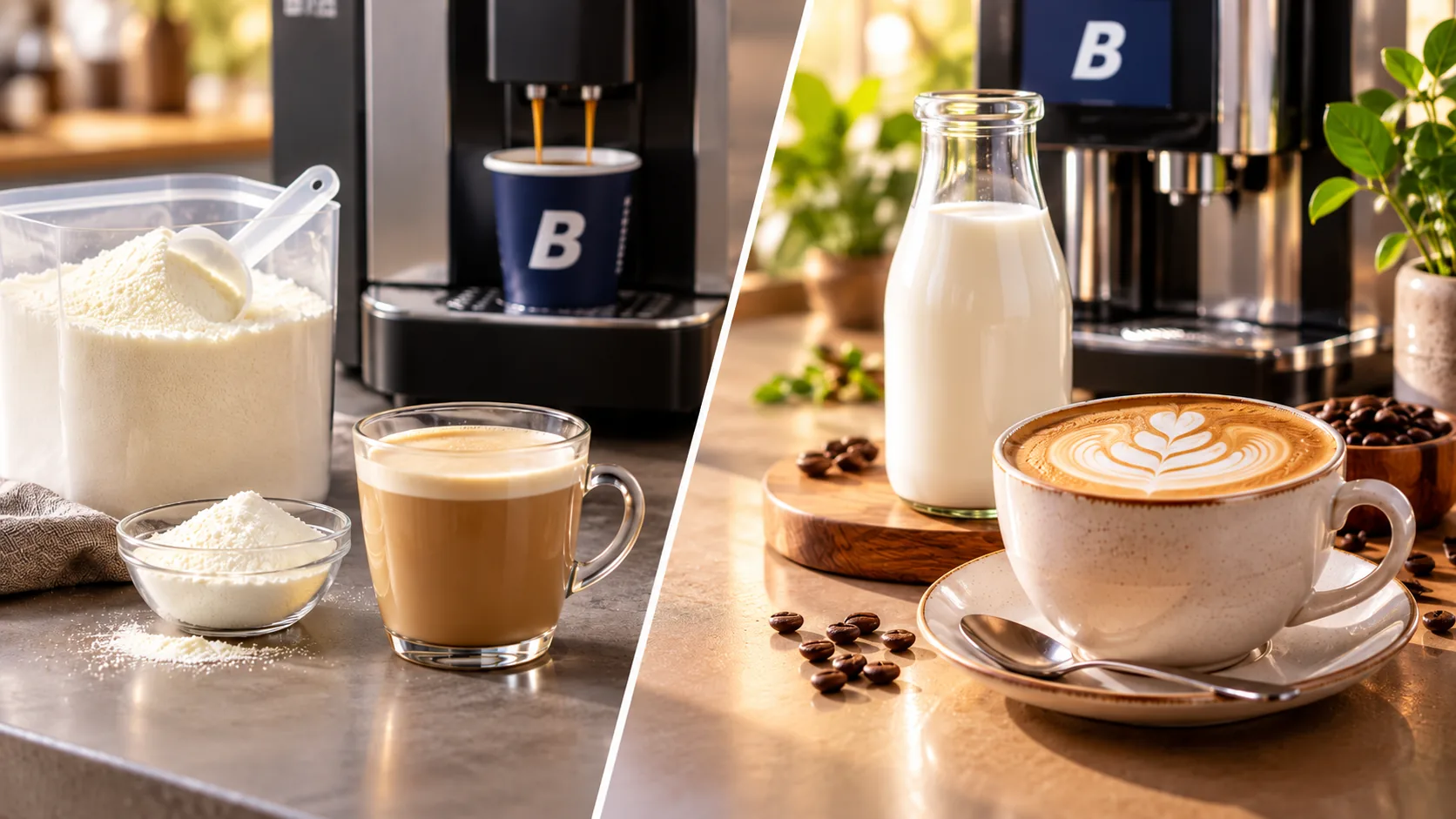
When you get a quote for a bean-to-cup machine, there's one choice that's easy to skip past and hard to change later: will it use fresh milk or powdered milk? It decides how your lattes and cappuccinos taste, how much cleaning your team does every day, whether you need a fridge next to the machine, and how much milk gets thrown away.
We supply both, so we have no reason to push you either way. This guide covers the fresh milk vs powdered milk coffee machine decision honestly, and ends with which one tends to suit which kind of site.
The Short Answer
- Choose fresh milk if milk drinks are the main event: you sell coffee to customers, or quality is the priority and someone will reliably clean the milk system every day.
- Choose powdered milk if you want the lowest daily upkeep: the machine runs unattended, there's nowhere to keep milk chilled, demand is patchy, or whoever looks after the machine isn't a barista.
One thing people often miss is that black coffee is identical either way. Espresso and americano never touch the milk system, so the beans, the grind and the brewing temperature decide how they taste. The milk choice only affects milk drinks.
Taste and Texture
This is where fresh milk wins. Fresh milk froths into a silkier, sweeter foam, and lattes, flat whites and cappuccinos taste closest to what you'd get in a coffee shop. If your customers are paying café prices, or your team are used to their local coffee shop, they'll notice.
Powdered milk has come a long way, and good-quality powders make a perfectly pleasant, consistent milky coffee. It isn't the same as fresh, though, and it's better to taste both versions side by side than to take anyone's word for it, ours included. That's what our free demo is for.
Powder does have one taste advantage: consistency. Every cup is the same, and there's no risk of a drink made with milk that's been sitting out too long.
Daily Cleaning and Hygiene
This is where powdered milk wins.
- Fresh milk runs through tubes and a frother, and milk residue spoils quickly. The milk system has to be cleaned every day, usually with the machine's milk-clean programme and a dedicated cleaner, and the removable milk parts need a regular deeper clean. Skip it and milk drinks start to suffer within days.
- Powdered milk removes that daily milk-system clean. The powder mixing area still needs rinsing, and the canister has to be kept dry, because damp powder clumps and blocks the dispenser. But it's a lighter, more forgiving routine.
Neither is difficult if someone owns the job. Our guide on how to clean a bean-to-cup coffee machine covers the routine for both. The honest question is whether that person exists at your site every single day, including Fridays and holidays.
Storage, Shelf Life and Waste
- Fresh milk needs to be kept chilled, which usually means a small fridge next to the machine, and it has a short shelf life once opened. Sites that are quiet at weekends or over holidays can end up pouring milk away, and someone has to keep it topped up and rotated.
- Powdered milk is shelf-stable and needs no fridge. It just needs to be kept dry, and it lasts far longer. For sites with patchy demand, such as a showroom on a quiet Tuesday or an office half-empty on Fridays, that means much less waste.
Cost
The per-cup cost of the milk itself is rarely what decides it. What changes the total cost more is:
- Wastage: out-of-date fresh milk on low-demand days
- Staff time: the extra daily milk-system clean
- Equipment: a fridge for fresh milk, and the space and power it takes
Ask any supplier to quote the cost per cup for both versions on the same drinks menu, so you're comparing like with like. Our guide to commercial coffee machine running costs covers the rest of the picture.
Dairy-Free and Allergens
More teams and customers now ask for oat or other plant-based milk, so check this before you choose:
- Fresh milk machines can usually run a plant-based "barista" milk, which is made to foam. Some sites keep a second milk container for it. Mixing milks in one system means cleaning matters even more.
- Powdered milk machines use the powder in the canister, so a dairy-free option depends on the machine and on what powders are available for it. Ask before you order rather than after.
Milk is one of the 14 allergens that food businesses must give information on. If you serve drinks to customers, residents or patients, keep the ingredient and allergen details for any milk, powder or syrup you use.
Which Suits Your Site?
- Cafés and anywhere selling coffee: usually fresh milk. Customers paying for a latte expect fresh milk texture, and with a busy service the milk is used up quickly. See choosing a coffee machine for a new café, and our profit calculator for what drinks quality is worth.
- Offices: either. Fresh milk suits an office with a kitchen, a fridge and someone who owns the cleaning. Powder suits offices with no dedicated person, quieter days, or a machine in a meeting area. Our office coffee machine guide covers the other choices.
- Showrooms, receptions and waiting areas: often powder. Demand is patchy, the machine is customer-facing, and nobody wants a fridge on display.
- Care homes: often powder. Care staff are looking after it alongside everything else, and lower hygiene demands matter. See our guide to coffee machines for care homes.
- Gyms, clubs and 24-hour sites: depends on whether coffee is a revenue line (fresh) or a members' perk running long unattended hours (powder).
How Blend 2 Vend Approaches This
With us, you can choose a fresh milk or powdered milk machine. We'll recommend one based on your site at the free demo, and you can taste drinks before deciding. Whichever you choose, the rest of the service is the same:
- Installation, plus on-site staff training covering daily use, cleaning and maintenance for your machine
- Scheduled servicing and deep cleans
- Automatic restocking of beans and consumables
- A 24-hour support line that resolves around 99% of issues over the phone, with a next-day callout as standard
You can take either version on lease to own from £89 a month through Shire Leasing, or buy it outright.
Frequently Asked Questions
Does powdered milk coffee taste worse than fresh milk? Milk drinks made with fresh milk have a silkier texture and a sweeter taste, and most people can tell the difference side by side. Good-quality powdered milk still makes a pleasant, consistent milky coffee. Black coffee such as espresso or americano tastes the same either way.
Is a powdered milk coffee machine easier to clean? Yes. It removes the daily milk-system clean that fresh milk machines need. The powder mixing area still needs rinsing and the canister has to be kept dry, but the routine is lighter.
Do fresh milk coffee machines need a fridge? Yes. Fresh milk has to be kept chilled while the machine is in use, which usually means a small fridge alongside it.
Can you use oat milk in a bean-to-cup coffee machine? In a fresh milk machine, usually yes. A barista-style plant milk foams best, and cleaning becomes even more important if you switch between milks. For powdered milk machines, it depends on the machine and the powders available, so check with your supplier first.
Can I switch from powdered to fresh milk later? It depends on the machine. Some models come in both versions and some don't, so it's worth deciding before you order. We'll set out the options for the machine that suits your site.
Not Sure Which Milk Is Right for You?
Book a free demo and taste test. We'll bring a machine to your site, make drinks so you can taste them, and recommend fresh or powdered milk based on how your site actually runs.
Book a free demo → or speak to a specialist.