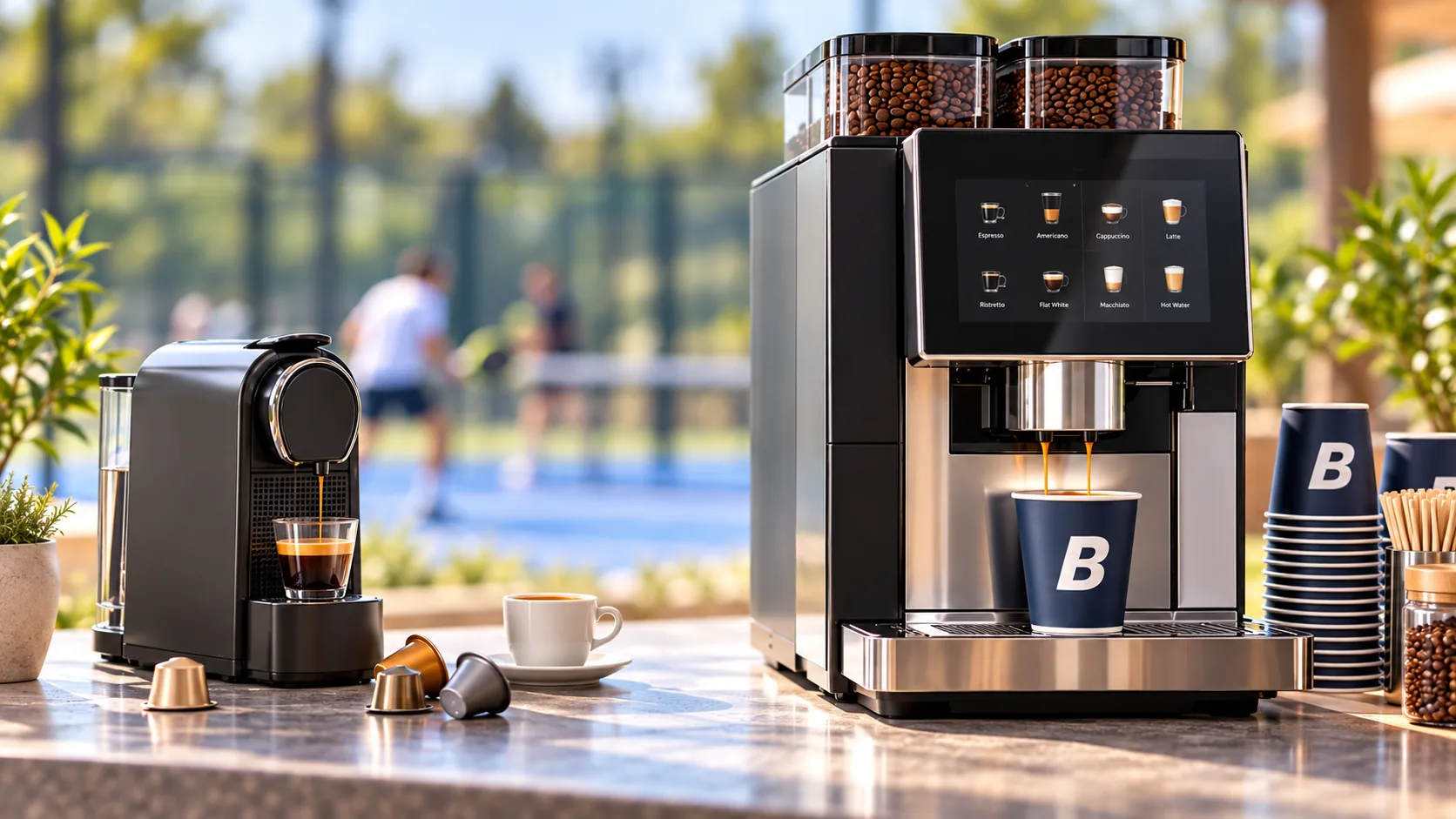
If you are looking for a Nespresso Professional alternative, the usual step up for a UK business is a fully managed bean-to-cup machine. It grinds whole beans for every cup and textures milk for each drink. On a managed plan you also stop ordering capsules, because beans and supplies arrive on a schedule and servicing is handled for you.
Whether it will cost you less depends mostly on how many cups your team drinks each day. Below a certain volume, capsules are hard to beat. Above it, a charge on every cup adds up quickly. This guide shows you how to work out what you are spending now, and says plainly when you should stay with capsules.
Signs You Have Outgrown a Capsule Machine
Capsule machines are a sensible starting point, being quick, tidy and low-effort. Businesses usually start looking for an alternative when one or more of these become true:
- The capsule bill keeps rising. Every drink has its own cost, so spending grows in step with your headcount.
- There's a queue at 9am. A capsule machine makes one drink at a time, and at busy times that shows.
- Milk drinks matter to your team. If most people drink flat whites or lattes, the milk is as important as the coffee.
- Somebody spends their week managing capsules. Ordering, stocking, running out, and emptying the used-capsule bin.
- Used capsules are piling up. Capsules can be recycled, but only if somebody collects and returns them.
- You want to offer more. Iced coffee, hot chocolate, chai or matcha for customers or members, not only espresso for staff.
If two or three of those sound familiar, it's worth doing the maths.
Work Out What Your Capsules Cost Each Month
Your own invoice is the only figure that matters here, because capsule prices vary by blend, order volume and account terms. The sum itself is simple:
Price per capsule × capsules per drink × drinks per day × working days per month
To show how quickly this adds up, take an assumed price of 35p a capsule, one capsule per drink and 21 working days a month. That is an illustration, not a quoted price:
- 10 drinks a day comes to about £74 a month
- 25 drinks a day comes to about £184 a month
- 50 drinks a day comes to about £368 a month
- 100 drinks a day comes to about £735 a month
That figure covers the capsules only. Milk, cups, descaling products and the time spent ordering and restocking all come on top.
Once you have your own number, send it to our team along with a rough daily cup count. We'll put a like-for-like quote next to it, showing what a managed bean-to-cup machine would cost your site and exactly what that price covers, and we'll tell you honestly if capsules still work out cheaper. For the wider running-cost picture, see our guide to commercial coffee machine running costs, or our bean-to-cup vs instant comparison if part of your team is still on a jar.
What Changes When You Move to Bean-to-Cup
The coffee. Beans are ground fresh for each drink, and you choose the beans rather than choosing from a capsule range. We supply ours through a small-batch roaster in Brighton.
Milk drinks. A good bean-to-cup machine textures milk for each drink. For teams that mostly drink lattes and cappuccinos, this is usually where people notice the biggest difference.
Speed at peak times. A machine sized for your busiest half-hour keeps the queue moving. Even our entry-level machines handle up to around 100 cups a day, and higher-output models handle 300 or more.
The menu. Our entry-level machines make coffee and iced coffee. The mid-range adds matcha, hot chocolate and chai, which matters if you serve customers, members or guests.
The admin. On a managed plan, the beans and consumables arrive on a schedule and servicing is handled for you. Nobody has to place capsule orders any more.
The cleaning. To be straight about it, a bean-to-cup machine needs more daily care than a capsule machine. There is a short daily clean of the milk system and a periodic deep clean. We train your team on the daily routine at installation, and the deep cleans are part of the service. It is still more than zero effort, though, so plan for it.
When You Should Stay With Capsules
A capsule machine is still the right answer for some businesses. We'd suggest staying put if:
- Your team drinks only a handful of cups a day between them
- Almost everyone drinks espresso or black coffee, so the milk doesn't matter
- You have no practical way to give a machine water and space, and nobody to do a short daily clean
- Variety matters more to your team than freshness, and they value choosing from a capsule range
If that describes you, switching probably won't save you money or trouble, and we'd rather tell you that now.
How to Make the Switch Without a Gap
Moving from capsules to bean-to-cup is simpler than moving between two bean-to-cup suppliers, but a few things are worth sorting out first:
- Check what you own. If you bought the capsule machine, there's nothing to hand back. If it came with a supply agreement, check the notice period and minimum term before you commit to a date. Our guide to switching coffee machine supplier walks through this.
- Use up or reallocate capsule stock. Stop reordering a few weeks before the changeover, and keep the old machine in a meeting room until the stock runs out if that helps.
- Confirm the site. Power, a water supply or a tank, and the counter space. We check all of this at the demo visit.
- Install and train on the same day. The new machine goes in, the team learns the daily clean, and nobody goes without coffee.
How Blend 2 Vend Approaches This
Most businesses that move to us from capsules do it for the reasons above: the per-cup cost has stopped making sense, or the team wants better milk drinks. We start with a free demo and taste test on site, so your team tastes the difference before anyone signs anything, and we check the space at the same visit.
You can lease to own or buy outright, so the machine ends up yours either way, and the fully managed service is identical on both: installation, training, servicing, restocking, a 24-hour support line and a next-day callout if an engineer is needed. If you are not sure which route suits you, we compare leasing and buying side by side.
Frequently Asked Questions
Is bean-to-cup cheaper than Nespresso Professional for an office? It depends on how much your team drinks. Capsules charge per cup, so at low volumes they are often the cheaper option. As daily volume rises, a managed bean-to-cup machine usually becomes the better value. Work out your monthly capsule spend with the formula above, and our team will quote against it.
Is the coffee from a bean-to-cup machine better than capsules? Beans ground fresh for each drink, with milk textured for each cup, are what most people notice, particularly in milk-based drinks. The best test is to taste both side by side, which is what our free demo is for.
Does a bean-to-cup machine need plumbing in? Not always. Some machines run from a water tank, and others are plumbed in for higher volumes. We'll recommend the right option for your site and your volume at the demo.
How much cleaning does a bean-to-cup machine need? More than a capsule machine. There's a short daily clean, mainly of the milk system, and periodic deep cleans. We train your team on the daily routine, and scheduled servicing and deep cleans are included in our service.
Can we keep our capsule machine as well? Yes. Some businesses keep it in a meeting room or use up the remaining capsules before retiring it. There's no need to remove it on installation day.
Ready to Compare Against Your Capsule Bill?
Fill in the contact form with your rough daily cup count, or send us last month's capsule invoice, and a member of our team will come back to you with a straight comparison. If bean-to-cup makes sense for you, we'll book a free demo so your team can taste the difference first.
Speak to our team → or call a specialist.
Nespresso and Nespresso Professional are registered trade marks of Société des Produits Nestlé S.A. Blend 2 Vend is not affiliated with, endorsed by or sponsored by Nestlé. Brand names are used only to identify the products being compared.