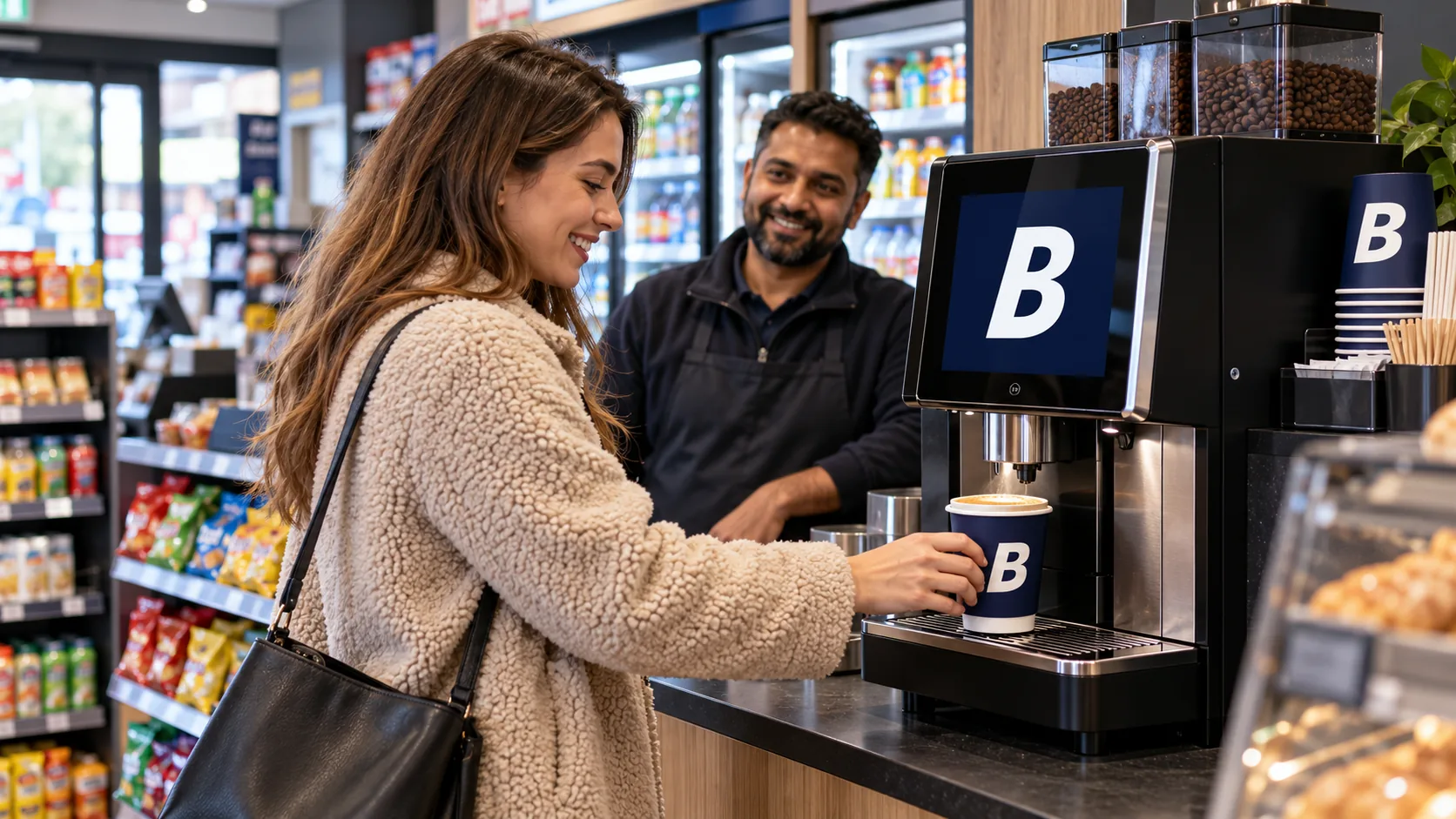
Takeaway coffee has become one of the most natural add-ons a local shop can offer. Customers already pop in for a paper, a meal deal, a pint of milk or fuel, and a good coffee is an easy extra on the same trip, especially first thing in the morning. A self-serve machine takes up little more than a metre of counter and runs without a member of staff behind it.
The question for most independent shops isn't whether coffee will sell. It's how to do it in a way that makes money for you. Whether you run a convenience store, a corner shop, an off-licence, a newsagent or a forecourt, this guide covers how to choose a coffee machine for convenience store trade, owning it versus hosting a branded scheme, pricing your cup, and the practical setup that decides whether it works.
Why Takeaway Coffee Works in a Local Shop
- It's an add-on, not a destination. You don't need to win new customers. You sell an extra item to people already in the shop.
- It suits your busiest hours. The morning commute, the school run and lunchtime are when shops are busy and people want a hot drink.
- It goes with what you already sell. A coffee pairs naturally with a pastry, a sausage roll, a breakfast bap or a meal deal.
- Self-serve means no barista. The customer picks a drink on a touchscreen, the machine grinds fresh beans and pours it, and they pay at the till with everything else.
Which Kind of Shop Are You?
The same machine works across all kinds of local shop, but the trade looks a bit different in each:
- Convenience stores and symbol-group shops (Londis, Costcutter, SPAR, Nisa and the like): steady all-day footfall, with a strong morning and lunchtime peak. Takeaway coffee fits next to the food-to-go and meal deal range.
- Corner shops: a loyal, local and often regular crowd. A good coffee gives regulars another reason to come in every day rather than once a week.
- Newsagents: an early-morning trade of commuters picking up a paper, which is exactly when people want a coffee.
- Off-licences: late opening hours mean an evening trade most coffee shops have closed for. A proper decaf and a hot chocolate earn their place here.
- Forecourts: drivers who want something quick and hot. Speed and a clear price board matter most.
Two Ways to Do It: A Branded Scheme or Your Own Machine
You'll have seen big-name self-serve coffee machines in forecourts and convenience stores. Broadly, there are two models:
A branded self-serve scheme. A coffee brand or operator places its machine in your shop, under its brand, and the takings from each cup are split between you and the operator. The appeal is a recognised name and little or no upfront cost. The trade-off is that you usually keep only part of the takings, and the terms, prices and contract length are set by someone else. Terms vary a lot between schemes, so read the agreement closely, especially the contract length, minimum volumes and what happens if you want to leave.
Your own machine. You lease or buy a commercial bean-to-cup machine, set your own prices and keep the margin on every cup. You're paying for the machine and supplies, so the risk is yours too. But for a shop with steady footfall, ownership is usually where the money is.
We supply the second model. If you're weighing the two up, ask any branded scheme for its numbers in writing and compare them with the sums below.
What the Sums Look Like
On our services page we publish an illustration: selling café-quality coffee at around £3.80 a cup, a busy site serving roughly 80 cups a day can earn about £84,000 a year in coffee profit on a premium machine. That's around £55,000 more than a cheap machine stuck at £2.50 a cup that loses repeat trade to lukewarm, low-grade coffee.
Your shop won't match that exactly. Your prices, footfall and opening hours are your own. The point is the shape of it: the machine cost is fixed, so every extra cup you sell goes mostly to your margin. Our profit calculator lets you put in your own cups per day and price per cup to see what it could mean for your shop. For the cost side, see our guide to commercial coffee machine running costs.
Pricing Your Coffee
- Look at what's nearby. Check what the local café, high-street bakery chain and nearest forecourt charge, and pitch your price for the quality you're serving.
- Don't undersell good coffee. A premium, properly hot drink can command a coffee-shop price. Cheap coffee at a cheap price tends to be bought once.
- Remember VAT. Hot drinks are standard-rated for VAT whether they're drunk in or taken away, according to HMRC's catering and takeaway guidance. If you're VAT registered, build the 20% into your shelf price.
- Consider a deal. A coffee and a pastry for a set price is a simple way to lift the average basket.
Setting It Up
Where the machine goes matters as much as which machine it is.
- Placement: near the door or the till, where people see it as they walk in and pass it on the way to pay. Don't tuck it away at the back.
- A proper coffee station: cups in a couple of sizes, lids, sugar, stirrers, napkins and a bin, all within reach. If customers have to ask for a lid, the station isn't finished.
- Paying: most shops have customers pay at the till. Set up a till key or barcode for each size or drink on your EPOS so staff can ring it through in seconds.
- Signage: a simple price board and a "freshly ground coffee" sign in the window or by the door does a lot of the selling.
- Power and water: a nearby socket, and either a refillable water tank or a plumbed-in supply. We check this at the free demo.
Fresh or Powdered Milk?
For a busy self-serve station, the milk choice matters. Fresh milk gives the best texture, and you already have chillers, but the milk system needs cleaning every day and the milk needs a fridge next to the machine. Powdered milk removes the daily milk clean and suits unattended self-serve well. Our guide to fresh milk vs powdered milk coffee machines covers the trade-off.
The Drinks Menu
Keep the menu short and quick. Flat white, latte, cappuccino and americano cover most orders. Beyond that:
- Iced coffee: even our entry-level machines make iced coffee, a handy seller in summer
- Hot chocolate, chai and matcha: available on our mid-range machines, for customers who don't drink coffee
- Decaf: a proper decaf, so the afternoon and evening trade isn't lost, which matters most in an off-licence
The beans make more difference than anything else. Our guide to the best coffee beans for bean-to-cup machines explains what to look for, and you can see the coffees we supply.
Allergens: milk is one of the 14 allergens you must give information on, so keep the details for any milk, powders and syrups with your other allergen information.
Daily Upkeep
A self-serve machine needs a few minutes a day from whoever locks up: empty the grounds bin and drip tray, run the rinse and cleaning programmes, and wipe down the machine and the coffee station. A tidy station sells more coffee. Our bean-to-cup cleaning guide sets out the full routine.
Owning It: Lease or Buy
- Lease to own: from £89 a month through Shire Leasing, typically over 36 months, with no upfront cost and the machine yours at the end of the term. In a shop with steady trade, a few cups a day can cover the monthly payment.
- Outright purchase: prices on request, with buy now pay later available to spread the cost.
Either way, the machine is yours, the prices are yours and the margin is yours.
How Blend 2 Vend Approaches This
We supply, install and look after premium bean-to-cup machines for shops across the UK:
- A free demo and taste test in your shop, so you and your staff can try the drinks
- A machine sized for your footfall and counter space, with fresh or powdered milk
- Installation and on-site staff training, covering daily use, cleaning and maintenance
- Scheduled servicing and automatic restocking of beans and consumables
- A 24-hour support line that resolves around 99% of issues over the phone, with a next-day callout as standard, so the machine isn't out of action on a busy morning
Frequently Asked Questions
Is a coffee machine worth it for a corner shop or convenience store? For a shop with steady footfall, usually yes. Takeaway coffee is an easy add-on for customers who are already in the shop, and because the machine cost is fixed, extra cups go mostly to your margin. Use our profit calculator with your own numbers to check.
Can an off-licence sell takeaway coffee? Yes. Your premises licence covers alcohol, not hot drinks, and an off-licence's late opening hours can bring in evening trade that coffee shops miss. As with any food business, keep your allergen information up to date.
Should I own my coffee machine or use a branded self-serve scheme? A branded scheme gives you a recognised name with little upfront cost, but you usually keep only part of the takings and someone else sets the terms. Owning the machine means you set the prices and keep the margin, in return for paying for the machine and supplies. Compare both on paper before deciding.
How much should a shop charge for takeaway coffee? Check what the nearby cafés and forecourts charge and price for the quality you serve. Remember that hot drinks are standard-rated for VAT, so build that into the price if you're VAT registered.
Do customers pay at the machine or at the till? In most shops, customers pay at the till along with the rest of their shopping. A dedicated till key or barcode for each drink keeps it quick.
How much space does a self-serve coffee machine need? Roughly a metre of counter for the machine and a small coffee station alongside, plus a nearby socket and either a water tank or a plumbed-in supply. We measure up and check the site at the free demo.
Add Takeaway Coffee to Your Shop
Book a free demo and taste test. We'll bring a machine to your shop, check your counter space and supply, and help you work out what coffee could earn you.
Book a free demo → or speak to a specialist.